In the world of fabrication and metalworking, precision and efficiency are paramount. Among the array of modern techniques available, laser welding has emerged as a leading solution for joining materials with unmatched accuracy and quality. Laser welding continues to prove its worth as a reliable, high-quality process. M.J. Nester recently began using this innovative technology, setting ourselves apart from leading competitors in the fabrication industry. But what exactly is laser welding, and why has it become the future for high-quality welding?
What Is Laser Welding?
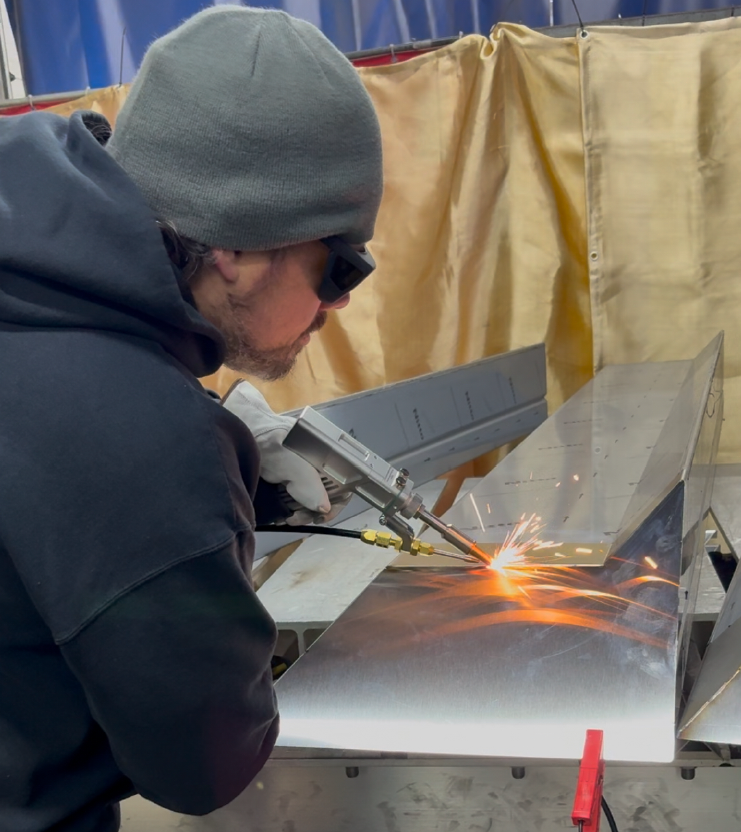
Laser welding is a process in which a high-powered laser beam melts and fuses materials, typically metals, at the joint. The heat generated by the laser melts the material, which then cools and solidifies, forming a strong bond. The laser is directed with great precision, allowing fine control over the weld size, depth, and overall joint quality.
Unlike traditional welding methods that require filler material or external heat sources like arc or gas, laser welding is a non-contact process. This means that there is less risk of contamination and distortion in the workpiece, making it ideal for delicate or high-precision applications.
Key Benefits of Laser Welding
- Precision and Accuracy
Laser welding provides incredibly precise control over heat input, minimizing the risk of damaging the surrounding material. This is particularly beneficial for industries that require high precision, such as electronics or medical device manufacturing. With the laser, it’s possible to weld fine, small parts without affecting the overall integrity of the workpiece. - Minimal Heat-Affected Zone (HAZ)
A smaller heat-affected zone means less distortion, warping, and potential changes to the material properties. Traditional welding methods often produce larger heat-affected zones that can weaken the material or cause it to deform. Laser welding’s focused heat is particularly useful for thin materials or components that require high structural integrity. - Minimal Post-Weld Cleanup
Thanks to the laser beam’s focus, laser welding produces neat, clean welds with less spatter and oxidation. Providing higher quality welds and final products. - Versatility
Laser welding is versatile in the types of materials it can weld. Whether it’s stainless steel, aluminum, or titanium, laser welding can be used to weld a wide range of materials. The technology is also flexible enough to weld dissimilar metals, which are more difficult to weld with conventional techniques.
Applications for Laser Welding
Laser welding has proven to be a valuable tool in various sectors. Recently, M.J. Nester used their laser welder for metal curbing, which is to be installed on-site. The team was able to provide higher-quality curbing than traditional welding techniques.
Challenges of Laser Welding
While laser welding offers numerous advantages, it’s not without its challenges. The initial investment in equipment can be quite high, making it less accessible for small-scale operations. Additionally, the technique requires a high level of expertise, both in handling the equipment and in optimizing the process for different materials.
Laser welding also requires a stable, clean working environment, as factors such as dust, humidity, and surface contamination can negatively affect weld quality. As with all precision technologies, maintenance of the equipment is crucial to ensure long-term performance.
M.J. Nester is addressing these challenges by building a room in our new building dedicated to laser welding. Not only will this allow the team to achieve optimal performance from this machine, but it will also create a safer work environment for all our team members.
Conclusion
Laser welding stands as one of the most advanced and efficient techniques in modern manufacturing. Offering unmatched precision, speed, and versatility, it continues to revolutionize industries.
Contact M.J. Nester to hear more about the capabilities of our Laser Welder.