AI may push a new generation toward skilled work. Whether they succeed will depend on whether industry remembers how to teach.
America has spent years talking about the skilled labor shortage as though an entire generation collectively woke up one morning and decided work was no longer their thing. “Nobody wants to work anymore” has become management’s emotional-support slogan because it is simple, satisfying, and requires absolutely no self-reflection from the person saying it.
The problem is that I do not believe we are suffering from a lack of talent combined with a lack of willingness. There are plenty of intelligent, capable people who are willing to work with their hands, solve real problems, learn technical skills, and build careers outside an office. What we are missing is a reliable system for finding those people, giving them a legitimate opportunity, and developing them into the skilled workers companies insist they cannot find.
A recent article from Hands That Build America argued that the United States does not just have a skilled labor shortage. We have a skilled knowledge shortage. The article traced the problem back through decades of plant closures, offshoring, declining industrial communities, and the disappearance of the workplaces where apprentices naturally learned beside experienced tradespeople. We did not simply lose jobs. We disrupted the chain through which technical knowledge and field judgment moved from one generation to the next.
When I shared that article on LinkedIn, my restrained and highly diplomatic summary was: “Replacing 30 years of tribal knowledge? Good fucking luck.” The discussion that followed showed just how layered this problem really is. Some people pointed out that younger workers are routinely overlooked because they lack experience, as though experience is supposed to arrive through divine intervention. Others said experienced workers were never given the time or structure to train anyone. One commenter called it a respect shortage, while another argued that the real failure was allowing critical knowledge to remain undocumented and concentrated in a few people for decades.
Annoyingly, they were all right.
The Shortage Is Real. The Story We Tell About It Is Lazy.
The blue-collar labor shortage is not imaginary. A workforce analysis from Deloitte and The Manufacturing Institute estimates that U.S. manufacturing may need as many as 3.8 million additional workers between 2024 and 2033. Without significant changes in how companies attract, train, and retain people, approximately 1.9 million of those positions could remain unfilled. The same analysis estimates that roughly 2.8 million of the total openings will result from retirements, making knowledge transfer far more than a motivational poster for the break room. It is a business-continuity issue.
Demand is also increasing in many of the occupations that keep plants, infrastructure, and industrial projects operating. The U.S. Bureau of Labor Statistics projects employment for industrial machinery mechanics, machinery maintenance workers, and millwrights to grow 13 percent from 2024 through 2034, with about 54,200 openings each year. Electricians are projected to see approximately 81,000 annual openings over the same period, with employment growing 9 percent. Many of those openings are expected to result from workers retiring, leaving the labor force, or moving into different occupations.
So, yes, employers are struggling to find skilled workers. But describing the entire problem as a talent shortage conveniently suggests that companies are innocent bystanders. Apparently, qualified workers were supposed to assemble themselves off-site, obtain several certifications, accumulate ten years of experience, and arrive Monday morning carrying their own tools and completed onboarding paperwork.
Companies say they want new talent, but many are really shopping for finished products. They want an entry-level employee who can work independently, troubleshoot complicated systems, communicate with customers, travel whenever needed, lead others, and become fully billable before lunch. Then they post the position at a wage that competes aggressively with managing a convenience store.
That is not workforce development. That is ordering a fully assembled employee from Amazon and getting angry because the shipping date keeps changing.
The real issue is that many companies have lost the patience, structure, and financial discipline required to develop people. Training reduces short-term productivity. Mentorship takes experienced employees away from immediate production. Apprentices make mistakes, new employees need supervision, and someone has to invest time before that worker begins generating a meaningful return.
We optimized away the process that created skilled workers. Now we are holding meetings about why skilled workers no longer seem to exist.
The Retiring Generation Shares Some of the Blame
There is an uncomfortable part of this conversation, and pretending it does not exist would turn this into the same polished corporate oatmeal everyone else is serving.
Some members of the retiring workforce failed to train the people coming behind them. Some protected their knowledge because being the only person who knew how to solve a problem made them valuable. Some dismissed younger employees before giving them a real chance. Others believed that because they learned through humiliation, neglect, or unnecessarily difficult working conditions, the next generation should enjoy the same delightful character-building experience.
There were experienced tradespeople who confused teaching with hazing. There were others who simply lacked the patience to explain what had become instinctive after 30 years. A person can be exceptional at a trade and still be terrible at transferring that knowledge. Those are different skills, despite our habit of assuming that putting a new employee beside a veteran automatically creates an apprenticeship program.
The retiring generation does not get a complete pass. Mastery should eventually include some responsibility for helping preserve the craft. That does not mean someone must postpone retirement indefinitely or spend the final years of a career carrying an entire company on their back. It means that part of being a senior professional should involve helping another person become capable of continuing the work.
However, leadership owns the larger failure because leadership designs the system.
Too many experienced workers were expected to maintain full production, answer every emergency call, solve the hardest problems, complete their paperwork, and somehow train younger employees during the magical spare time between breakdowns. Mentorship was treated as an unpaid side project rather than an essential business function. Whenever production targets and training competed for time, production won. Then management acted surprised when nobody was ready to step forward after the senior employee retired.
Every industrial company has some version of Kevin. Kevin knows which drawings are outdated, which machine has a personality disorder, which replacement part technically fits but absolutely should not be used, and which customer’s “net 30” payment terms are more of a creative-writing exercise. Kevin can hear a noise from across the plant and know whether something needs lubrication, alignment, adjustment, or an exorcism.
For years, the company’s knowledge-retention strategy has been to call Kevin. Then Kevin retires, receives a plaque, a grocery-store sheet cake, and perhaps a branded tumbler for his decades of service. On Monday morning, everyone realizes the company’s operating system just left the parking lot in a Ford F-150.
Kevin was never a succession plan. He was undocumented operational risk wearing work boots.
Younger Workers Are Not the Problem We Pretend They Are
Younger employees are often criticized for lacking loyalty, patience, practical ability, and work ethic. Some of that criticism is deserved because every generation includes people who want the rewards before developing the capability. This is not a new invention. The Roman Empire probably had an apprentice complaining that aqueduct construction did not provide enough remote-work flexibility.
But plenty of young people are willing to learn. They are simply trying to enter industries that frequently reject them for not already knowing the work. We ask for three to five years of experience in entry-level job postings, which is less of a qualification and more of a ransom note. We say we need people desperately, then build hiring processes designed to eliminate anyone who requires training.
We also spent decades telling students that success meant college, office work, and climbing a corporate ladder. Skilled trades were too often presented as a backup plan for people who were supposedly not “college material,” which was both insulting to the trades and dishonest about the technical ability required to succeed in them. Now employers want the same generation to reverse course immediately and enter fields many schools barely introduced to them.
Young workers still have responsibilities. They need to arrive reliably, accept coaching, respect safety standards, demonstrate curiosity, and understand that competence takes time. They cannot expect senior-level compensation or authority after completing three YouTube tutorials and purchasing an impressive pair of work boots.
Respect has obligations in both directions. Experienced employees must be willing to teach without treating humiliation as a training method. New employees must be willing to learn without interpreting every correction as a personal attack. Leadership must create the structure, time, incentives, and accountability that allow both groups to succeed.
This is one reason apprenticeships, internships, technical-school partnerships, and work-study programs matter. In the Deloitte and Manufacturing Institute study, 47 percent of surveyed manufacturers identified apprenticeships, work-study programs, or internships as the most effective way to increase interest in manufacturing careers. The Bureau of Labor Statistics also notes that most millwrights learn through three- or four-year apprenticeships that combine technical instruction with as much as 2,000 hours of paid on-the-job training per year. Apparently, becoming highly skilled takes more than issuing someone a company shirt and pointing toward the tool room.
The U.S. Department of Labor describes Registered Apprenticeship as a combination of paid work experience, mentorship, classroom instruction, progressive wage increases, and a portable credential. Its 2026 ApprenticeshipUSA fact sheet reports that 93 percent of apprentices retain employment after completing their programs. That does not mean every apprenticeship is automatically successful, but it is strong evidence that structured development works better than hoping inexperienced workers absorb knowledge through workplace osmosis.
The problem is not simply that young people lack skills. The problem is that we eliminated too many of the places where they were supposed to acquire them.
AI Will Change the White-Collar Bargain
Artificial intelligence is going to rearrange the labor market, whether we hold a meeting to approve it or not. It will change administrative work, customer service, marketing, finance, analysis, scheduling, documentation, and many of the jobs that once appeared to offer a safe, predictable career behind a desk.
The International Labour Organization’s 2025 research found that one in four jobs worldwide has some level of exposure to generative AI, with clerical occupations facing the highest exposure. The ILO is careful to distinguish exposure from automatic job elimination, noting that transformation of tasks is more likely than wholesale replacement in many occupations. Still, when technology can perform a growing percentage of someone’s daily work, it changes the number of people required, the skills employers value, and the security people associate with office careers.
The World Economic Forum’s Future of Jobs Report 2025 points in a similar direction. Employers expect clerical and secretarial roles, including administrative assistants, bank tellers, cashiers, and data-entry clerks, to experience some of the largest declines in absolute employment. At the same time, frontline roles such as construction workers, delivery drivers, farmworkers, and food-production workers are expected to experience significant growth. The report also found that 40 percent of surveyed employers anticipate reducing staff where AI can automate tasks, while 50 percent plan to move employees from declining roles into growing ones.
That does not prove that millions of accountants, marketers, and administrative professionals will march out of their cubicles tomorrow and become millwrights. Human career transitions are rarely that orderly, and most people become visibly distressed when asked to assemble furniture without a tutorial video.
But it does change the career calculation.
As AI absorbs more routine cognitive and administrative work, I believe more people will reconsider skilled trades, technical service careers, manufacturing, construction, maintenance, logistics, and other occupations tied to the physical world. Some will become electricians, millwrights, mechanics, welders, or operators. Others will move into controls, robotics, field service, industrial technology, estimating, fabrication, quality, safety, and project management.
AI will not make the skilled trades less technical. It will make them more technical.
The future industrial worker may need mechanical ability, electrical knowledge, digital fluency, data interpretation, safety discipline, and the judgment to recognize when a computer-generated answer does not match the machine sitting in front of them. The Bureau of Labor Statistics specifically expects continued adoption of automated manufacturing machinery to increase demand for industrial machinery mechanics because the conveyors, motors, rollers, robotics, and production equipment still need to be installed, maintained, diagnosed, and repaired. The automation sales presentation may look magical, but eventually something starts vibrating and a human being gets called.
AI can also help companies preserve and distribute knowledge. It can organize equipment manuals, convert recorded demonstrations into draft procedures, build troubleshooting guides, translate technical information, analyze maintenance histories, and make decades of field notes searchable. A company can interview retiring workers, record their explanations, catalog unusual failure modes, and build a knowledge system far more useful than a filing cabinet labeled “Old Stuff.”
But AI cannot download 30 years of judgment into a first-year apprentice. It cannot replace repetition, supervised responsibility, coaching, mistakes caught early, or the experience of seeing how equipment behaves when real-world conditions ignore the engineering assumptions.
AI can help preserve Kevin’s knowledge. It cannot turn a new employee into Kevin by Tuesday.
My Own Move From Desk Jockey to the Industrial World
I recently made my own transition from a career spent largely behind screens, dashboards, campaigns, meetings, and PowerPoint presentations into leading an industrial specialty contractor. I am moving from the corporate desk-jockey world into the blue-collar industrial world, although no one should expect to see me welding pipe, aligning machinery, or pulling wire.
That would be irresponsible, dangerous, and probably tremendous entertainment for the people who actually know what they are doing.
I am not pretending that becoming the CEO of an industrial company suddenly makes me a tradesman. A title does not replace technical experience, and putting on a hard hat does not automatically transfer credibility. Skilled people can spot executive cosplay from across a jobsite, usually because the boots are suspiciously clean and someone from marketing is holding a camera.
My responsibility is different. I need to understand the work well enough to support the people who perform it. That means visiting jobsites, walking plants, spending time in the fabrication shop, listening to foremen, talking with apprentices, and seeing where management decisions collide with field reality. It means understanding why jobs lose margin, why rework happens, why certain employees become bottlenecks, and why a process that looks perfectly reasonable in a spreadsheet becomes completely useless at 6:00 a.m. during a shutdown.
Getting our hands dirty again does not mean every executive needs to grab a wrench and become a liability. It means leaders need to leave the conference room and reconnect with the work their companies actually perform. We need to understand the conditions, tools, pressures, risks, and judgment involved instead of treating labor as a number on a capacity report.
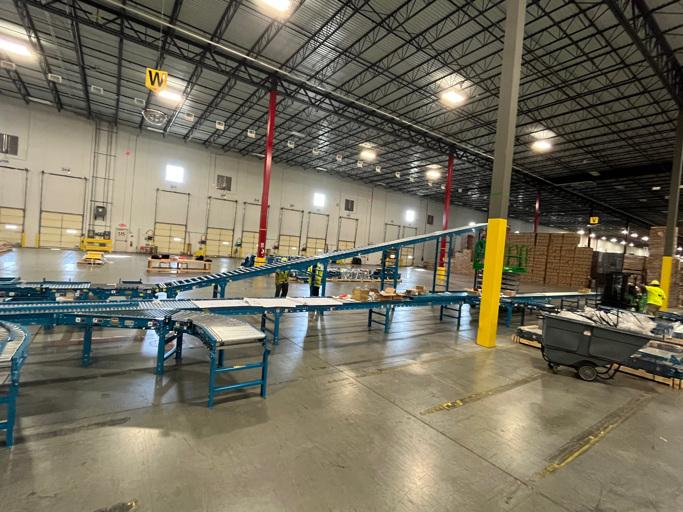
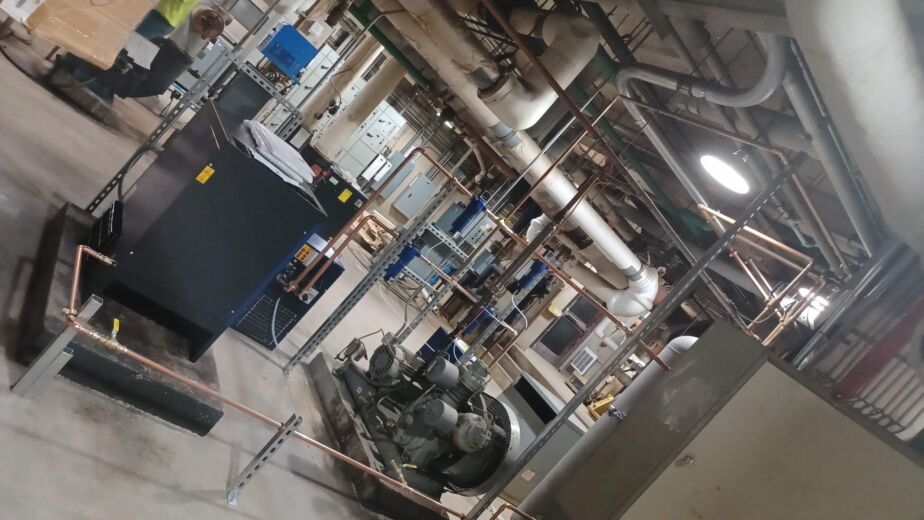
At MJ Nester, our work spans industrial electrical, mechanical and millwright services, welding and fabrication, controls, plant maintenance, and turnkey industrial projects. These fields rely on technical knowledge developed through direct experience. Technology can strengthen that process, document it, and accelerate parts of it, but people still have to teach people.
My transition is just beginning, and I expect the industrial world to teach me plenty, possibly with less patience than my previous corporate environment. That is fair. The point is not that everyone should quit an office job tomorrow and buy a welding helmet. The point is that the divide between the people who manage work and the people who perform it has become too wide.
It is time to close it.
We Need to Rebuild the Training Engine
Companies need to stop treating workforce development as an HR initiative and start treating it as operational infrastructure. A company would never knowingly operate critical equipment without preventive maintenance, yet many operate their entire workforce without a succession plan. Apparently, machinery deserves scheduled care, but human capability can be maintained through hope and an annual performance review.
The first step is identifying where critical knowledge lives. Companies need skills matrices showing who can perform each important task, who can troubleshoot independently, who can teach it, and who is currently being developed. Any critical function with only one qualified name beside it should be treated as a business-continuity risk, not proof that the person is indispensable.
Experienced employees also need time and incentives to teach. Mentorship must be recognized as productive work rather than something performed after the “real work” is finished. Training expectations should become part of senior roles, and the people who successfully develop others should see that contribution reflected in compensation, advancement, workload, and recognition.
New employees need structured pathways instead of vague instructions to “stick with Kevin and learn what you can.” Companies should define the skills that must be demonstrated at each stage, provide supervised opportunities to practice them, and connect progress to visible increases in responsibility and compensation. People are more likely to stay when they understand where they are going and what is required to get there.
Employers also need to broaden how they evaluate potential. Aptitude, curiosity, reliability, problem-solving, communication, and safety awareness may be more valuable over the long term than a résumé containing every keyword in the job description. Some of the best future tradespeople may currently be working in warehouses, restaurants, retail stores, military roles, office positions, or entirely different industries. They do not need to arrive fully formed. They need an entry point and a company capable of developing them.
Companies should also use AI aggressively but intelligently. Record experienced employees explaining unusual repairs, failure patterns, equipment histories, customer requirements, and field decisions. Convert that material into searchable procedures, training modules, inspection checklists, and troubleshooting resources, then have qualified people validate it before anyone treats it as gospel.
AI should support field judgment, not manufacture fake expertise at machine speed.
Finally, employers need to measure capability instead of merely counting heads. Knowing that a company employs 50 people does not reveal whether it has five people capable of leading a shutdown, two people who understand a critical control system, or nobody prepared to replace the senior millwright retiring next year. Time to competency, mentor coverage, certifications, skill depth, rework, safety performance, retention, and succession readiness belong on the leadership scorecard.
A full roster is not the same thing as a capable workforce.
This Is a Leadership Problem Now
The skilled labor shortage is real. The knowledge shortage beneath it is even more serious. Underneath both sits a leadership failure that developed over decades.
We outsourced work, dismantled apprenticeship pipelines, weakened technical education, allowed knowledge to remain undocumented, and treated skilled careers as second-class options. We waited until veteran workers were preparing to retire before asking who might replace them. Then we blamed younger people for not knowing what nobody taught them.
The next generation is out there. They are not lacking intelligence, potential, or willingness. They are unfinished, which is exactly what every experienced worker once was.
AI may push more people toward skilled, technical, and physical work. That creates a major opportunity for industrial companies, but only if those companies are ready to receive them. Recruiting people without training them will simply create a faster revolving door. Hiring apprentices without qualified mentors will create frustration. Buying technology without developing the people who operate and maintain it will produce some beautifully automated downtime.
Our job is to rebuild the bridge between generations. We need to find capable people, introduce them to meaningful careers, challenge them, teach them, and give experienced workers the responsibility and support to pass their knowledge forward.
Those of us in leadership also need to get closer to the work. We need to walk the floor, visit the jobsite, listen to the people in the field, and understand what capability really looks like outside a conference room.
The future of the skilled workforce is not hiding on slide 47 of another executive presentation. It is in the plant, in the shop, and out in the field, waiting for leadership to stop admiring the problem and start building people again.
Selected Sources
- Hands That Build America: “We Don’t Just Have a Skilled Labor Shortage. We Have a Skilled Knowledge Shortage.”
- Deloitte and The Manufacturing Institute: “Taking Charge: Manufacturers Support Growth with Active Workforce Strategies”
- U.S. Bureau of Labor Statistics: Industrial Machinery Mechanics, Machinery Maintenance Workers, and Millwrights
- U.S. Bureau of Labor Statistics: Electricians
- International Labour Organization: “Generative AI and Jobs: A Refined Global Index of Occupational Exposure”
- World Economic Forum: “The Future of Jobs Report 2025”
- U.S. Department of Labor: ApprenticeshipUSA 2026 Fact Sheet