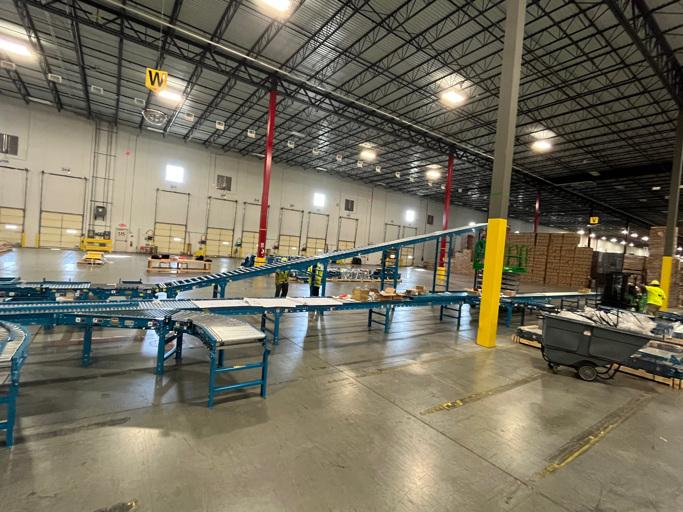
A millwright is a skilled tradesperson who installs, aligns, dismantles, relocates, maintains, and repairs industrial machinery and heavy equipment. Millwrights work on equipment such as conveyors, pumps, gearboxes, production lines, robotic systems, and packaging machinery, making sure each component is positioned, connected, and operating to exact specifications.
When a plant adds a new production line, replaces a damaged bearing, moves a multi-ton machine, or investigates a vibration that threatens output, a millwright is often one of the first skilled tradespeople called.
The job combines mechanical knowledge, precision measurement, rigging, fabrication, troubleshooting, and practical judgment. There is very little room for “close enough” when heavy equipment must operate safely at production speed.
What Does a Millwright Do?
A millwright helps put industrial machinery where it belongs, makes sure it runs correctly, and keeps it operating reliably.
Depending on the facility and project, that may mean installing a new conveyor, realigning a motor and pump, rebuilding a gearbox, relocating an entire production line, or responding to an unplanned equipment failure.
Common millwright duties include:
- Reading blueprints, layout plans, equipment drawings, and technical manuals
- Planning machinery installations, removals, and relocations
- Rigging, lifting, positioning, leveling, and anchoring heavy equipment
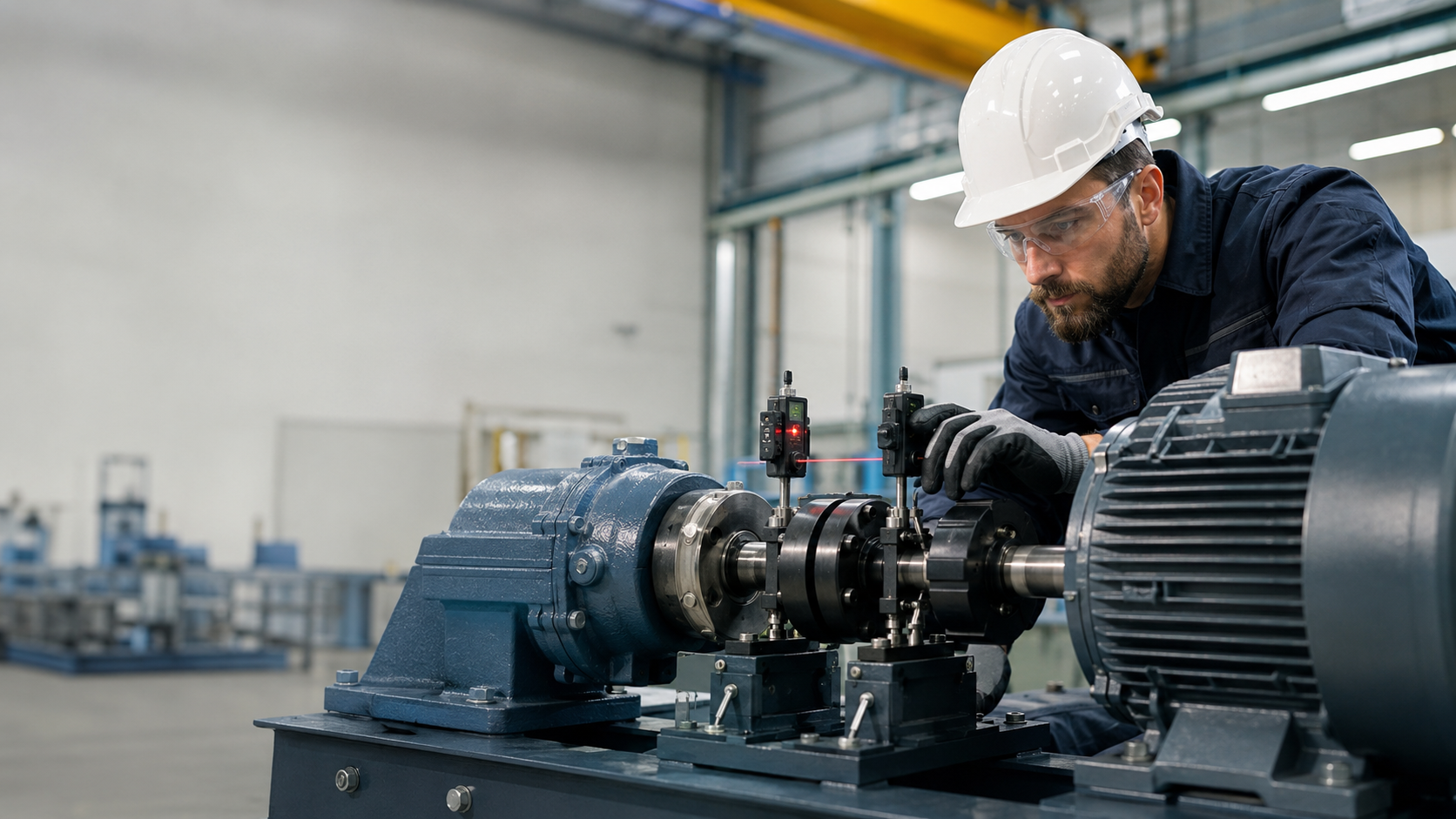
- Aligning shafts, couplings, motors, pumps, and gearboxes
- Measuring clearances, elevations, centerlines, and tolerances
- Disassembling machinery to inspect or replace broken components
- Replacing bearings, shafts, seals, belts, chains, rollers, and related parts
- Welding, cutting, drilling, fitting, or fabricating components when required
- Troubleshooting mechanical, hydraulic, pneumatic, and basic control problems
- Performing preventive maintenance, lubrication, calibration, and test runs
- Coordinating work with operators, engineers, electricians, welders, riggers, and other trades
O*NET identifies precision alignment, machinery installation, preventive maintenance, fabrication, welding, rigging, troubleshooting, and operational testing as core tasks.
The Main Types of Millwright Work
The exact job changes from project to project, but most millwright work falls into several core categories.
Machinery Installation and Commissioning
During a new machinery installation, millwrights may receive, inspect, assemble, position, level, align, and anchor the equipment.
The work can involve:
- Establishing equipment centerlines
- Setting and leveling baseplates
- Installing anchors and supports
- Placing shims
- Aligning connected shafts and couplings
- Torquing fasteners to specification
- Checking clearances and tolerances
- Supporting startup and commissioning
Precision matters at every stage. A machine that appears level to the eye can still be far enough out of tolerance to create vibration, bearing wear, coupling damage, seal failures, or product-quality problems.
Equipment Relocation and Plant Moves
When machinery or an entire production line must be moved, millwrights help plan the sequence, dismantle components, label parts, coordinate rigging, load the equipment, and reinstall it at the new location.
A successful machinery relocation involves much more than getting the equipment through the door. The machine must return to service with the correct elevation, orientation, alignment, operating clearances, and guarding.
This type of work may also require close coordination with industrial electricians, fabricators, pipefitters, controls technicians, crane operators, and transportation providers.
Preventive Maintenance
Preventive maintenance aims to identify wear before it causes equipment failure.
Millwrights may inspect machinery, lubricate moving parts, inspect alignment and belt or chain tension, replace worn components, and look for warning signs such as:
- Excessive heat
- Unusual noise
- Vibration
- Leaks
- Loose fasteners
- Abnormal movement
- Uneven wear
- Damaged guards or supports
The goal is to correct developing problems before they interrupt production or damage other components.
Corrective and Emergency Repairs
Corrective maintenance begins after identifying a problem. Emergency repair work begins after that problem has already ruined everyone’s schedule.
The millwright isolates the failure source, disassembles the affected equipment, repairs or replaces the damaged component, reassembles the machinery, and verifies proper operation.
Depending on the problem, the work may involve replacing bearings, shafts, seals, rollers, chains, belts, couplings, gearboxes, or fabricated components.
Machinery Teardown and Rebuilds
Some industrial equipment can be restored instead of replaced.
Millwrights may tear down pumps, conveyors, gearboxes, presses, and other machinery; inspect individual parts; replace worn components; restore the required clearances; and rebuild the equipment for testing and return to service.
Precision Alignment and Leveling
Precision alignment is one of the trade’s defining skills.
Millwrights use tools such as laser alignment systems, dial indicators, micrometers, levels, transits, straightedges, and feeler gauges to position machinery within specified tolerances.
Poor alignment can lead to:
- Excessive vibration
- Rising operating temperatures
- Seal failures
- Uneven wear
- Damaged couplings
- Repeated bearing failures
- Increased energy consumption
- Reduced equipment life
Proper alignment addresses the root cause instead of repeatedly replacing the first component that fails.
What Do Millwrights Work On?
Millwrights work anywhere industrial equipment moves, processes, packages, lifts, mixes, cuts, presses, heats, cools, or transports material.
Common equipment includes:
- Conveyor and material-handling systems
- Pumps, motors, compressors, and gearboxes
- Bearings, shafts, couplings, belts, chains, and rollers
- Packaging, bottling, and food-processing machinery
- Presses, ovens, kilns, mixers, and production equipment
- Robotic cells and automated manufacturing systems
- Turbines, generators, and power-generation equipment
- Dust-collection and ventilation systems
- Hydraulic and pneumatic equipment
- Entire production lines during expansions, shutdowns, or plant relocations
Millwrights commonly work in manufacturing plants, warehouses, distribution facilities, food and beverage operations, utilities, power facilities, mills, construction sites, and other industrial environments.
Millwright vs. Industrial Machinery Mechanic: What Is the Difference?
Millwrights and industrial machinery mechanics perform many overlapping duties, but some general differences exist.
Millwrights are strongly associated with:
- Installing new machinery
- Dismantling and relocating equipment
- Rigging and positioning heavy machinery
- Establishing centerlines and elevations
- Leveling and careful alignment
- Anchoring equipment and baseplates
- Supporting major shutdowns and plant moves
Industrial machinery mechanics frequently focus on diagnosing, maintaining, and repairing equipment already operating in a facility.
In practice, experienced workers may perform duties from both categories. This is especially common in smaller maintenance departments, during shutdowns, or when an urgent repair does not care what title appears on anyone’s business card. BLS describes millwrights as workers who install, dismantle, repair, reassemble, and move machinery in factories, power plants, and construction environments.
A millwright is also different from a machinist. A machinist primarily manufactures precision components using tools such as lathes, mills, and CNC equipment. A millwright installs and services the larger machinery and systems those components may become part of.
Skills Every Millwright Needs
Millwright work requires more than physical strength and familiarity with hand tools. Successful millwrights combine mechanical ability with accuracy, discipline, problem-solving, and communication.
Mechanical Aptitude
Millwrights must understand how industrial components interact and how force and motion travel through a machine.
They need working knowledge of:
- Bearings and shafts
- Motors and drives
- Gearboxes
- Couplings
- Belt and chain systems
- Fasteners and anchors
- Lubrication systems
- Hydraulics
- Pneumatics
- Mechanical power transmission
Precision Measurement
A small alignment or clearance error can become a serious operating problem.
Millwrights must be comfortable reading tolerances and using precision measuring instruments accurately. This includes understanding thousandths of an inch, equipment centerlines, shaft runout, soft foot, elevation, parallel alignment, and angular alignment.
Blueprint and Technical Drawing Interpretation
Millwrights use layout drawings, installation manuals, equipment specifications, and schematics to determine:
- Dimensions
- Elevations
- Centerlines
- Anchor locations
- Assembly sequences
- Equipment orientation
- Operating clearances
- Foundation requirements
Troubleshooting
Good troubleshooting follows a process.
A millwright observes the symptoms, gathers information, tests likely causes, inspects components, and determines what must be corrected before replacing parts or restarting equipment.
The strongest millwrights don’t just repair the visible failure. They determine why it happened.
Rigging and Material Handling
Machinery installation and relocation may require hoists, jacks, dollies, forklifts, cranes, rollers, slings, shackles, chain falls, and other lifting equipment.
Millwrights must understand load control, communication, equipment limitations, center of gravity, safe positioning, and lift planning.
Welding and Fabrication
Not every millwright is a certified welder, but welding, cutting, fitting, and fabrication are valuable skills.
These capabilities allow crews to modify equipment supports, install guards, repair components, fabricate brackets, and address field conditions that differ from the original drawings.
Safety Awareness
Millwrights work around suspended loads, stored energy, rotating equipment, hot work, elevated surfaces, sharp materials, confined spaces, and active production environments.
Important safety practices include:
- Lockout/tagout
- Fall protection
- Machine guarding
- Lift planning
- Hot-work controls
- Confined-space procedures
- Proper personal protective equipment
- Clear task and hazard communication
Safety is part of the job itself, not a separate activity performed after the mechanical work has already been planned.
Collaboration and Cooperation
Millwrights rarely work alone.
Machinery installations, shutdowns, and relocations require coordination with plant operators, maintenance departments, electricians, pipefitters, welders, controls technicians, engineers, crane operators, supervisors, and project managers.
O*NET identifies attention to detail and dependability as important work styles for millwrights, while equipment maintenance, installation, troubleshooting, and operations monitoring are listed as key transferable skills.
What Tools Do Millwrights Use?
A millwright’s tools may include:
- Standard hand and power tools
- Torque wrenches
- Hydraulic jacks and presses
- Bearing pullers
- Chain falls and come-alongs
- Rigging hardware
- Micrometers and calipers
- Dial indicators
- Feeler gauges
- Precision levels and transits
- Laser alignment systems
- Welding and cutting equipment
- Vibration and diagnostic instruments
The trade is becoming increasingly technical. Modern millwrights may also work with computerized maintenance-management systems, digital drawings, vibration data, robotic equipment, automated production systems, sensors, and basic machine controls.
O*NET also identifies software such as CAD, ERP, email, spreadsheet, and office applications within the occupation’s broader technology profile.
What Is the Work Environment Like?
Most millwrights work in industrial or construction settings rather than climate-controlled offices.
The work may involve:
- Noise
- Heat or cold
- Dust and debris
- Heights
- Confined or cramped spaces
- Awkward working positions
- Heavy components
- Active production areas
Personal protective equipment and strict safety procedures are standard. O*NET reports that accuracy is extremely important in this occupation and that workers regularly encounter industrial noise, protective equipment requirements, and physically tough conditions.
Schedules vary by employer and project.
Some millwrights work predictable plant-maintenance shifts. Others travel between project sites or work planned shutdowns, outages, nights, weekends, and overtime. BLS notes that full-time work is typical and that on-call, night, weekend, and overtime assignments may occur.
For people who enjoy variety, visible results, and solving real mechanical problems, that environment can be a major advantage.
How to Become a Millwright
There is no single route into the trade, but the most common path combines basic education with structured, paid, hands-on training.
1. Earn a High School Diploma or GED
Most employers and apprenticeship programs require a high school diploma or equivalent.
Helpful subjects include:
- Algebra
- Geometry
- Physics
- Mechanical drawing
- Welding
- Industrial technology
- Shop classes
2. Develop Basic Trade Skills
Entry-level candidates benefit from experience with hand tools, power tools, measurement, blueprint reading, mechanical systems, welding, fabrication, or industrial maintenance.
A technical-school certificate or associate degree in industrial maintenance can help, but it is not the only way into the trade.
3. Enter an Apprenticeship or Employer Training Program
Most millwrights learn through a three- or four-year apprenticeship.
According to BLS, apprenticeship training may include at least 144 hours of relevant technical instruction and up to 2,000 hours of paid on-the-job training for each year of the program. Classroom and field training may cover welding, mathematics, blueprint reading, machinery installation, lubrication, repair, troubleshooting, and safe tool use.
Apprentices earn wages while learning under experienced tradespeople, which remains one of the more rational approaches to career training devised by civilization.
4. Earn Relevant Safety and Equipment Credentials
Requirements vary by employer, project, union, and location.
Helpful credentials may include:
- OSHA safety training
- Forklift certification
- Mobile elevating work platform training.
- Rigging and signaling qualifications
- Welding certifications
- Confined-space training
- First aid and CPR
- Equipment manufacturer training
Not every credential is required for every millwright position. Candidates should review the expectations for the industries and employers they plan to pursue.
5. Build Field Experience
After completing an apprenticeship or equivalent training, millwrights are expected to perform increasingly complex work with less supervision.
That can include:
- Planning installation and repair tasks
- Selecting tools and rigging methods
- Checking tolerances
- Diagnosing mechanical failures
- Leading portions of an installation
- Working with other trades
- Documenting completed work
6. Continue Learning
Industrial machinery continues to incorporate robotics, automation, sensors, electronic controls, and predictive-maintenance technology.
Millwrights who continue building their skills in electrical systems, controls, vibration analysis, laser alignment, welding, fabrication, and leadership expand both their value and their career options.
Millwright Career Path
A typical millwright career path may progress through roles such as:
- Millwright apprentice
- Qualified or journey-level millwright
- Lead millwright
- Foreman or general foreman
- Field superintendent or maintenance supervisor
- Estimator, planner, project manager, trainer, or operations leader
- Helper or entry-level industrial mechanic
Experienced millwrights can also specialize in areas such as:
- Precision alignment
- Conveyor systems
- Turbine and power-generation work
- Robotics and automation
- Rigging
- Machinery installation
- Food-processing equipment
- Plant relocation
- Shutdown and outage work
The career path doesn’t have to lead to management. A highly skilled millwright who can diagnose difficult failures, lead critical lifts, align complex equipment, and complete shutdown work safely can build a strong career while remaining in the field.
Millwright Salary and Job Outlook
A millwright salary varies by experience, geographic market, industry, union status, work schedule, overtime, travel, and specialized skills.
The latest available national BLS wage data from May 2025 show:
- Median hourly wage: $31.59
- Median annual wage: Approximately $65,700
- Mean annual wage: $69,780
The median is the midpoint of reported wages, while the mean is the mathematical average.
Apprentices generally earn less while completing their training. Experienced millwrights may earn more through advanced technical skills, supervisory responsibilities, overtime, shift premiums, travel assignments, or employment in higher-paying industries and regions.
The employment outlook requires a little more nuance than many career articles provide.
BLS projects 13 percent growth from 2024 through 2034 for the wider occupational group that includes industrial machinery mechanics, machinery maintenance workers, and millwrights. For millwrights specifically, O*NET reports little or no net employment change over the same period.
A flat employment projection does not mean companies will stop hiring millwrights. Openings will still occur as experienced workers retire, move into leadership positions, change occupations, or leave the workforce. Industrial facilities will also continue to need qualified workers for machinery installations, plant moves, shutdowns, repairs, and maintenance.
Is Being a Millwright a Good Career?
Millwright work can be an excellent career for someone who:
- Enjoys building, repairing, and understanding mechanical systems
- Wants work with visible and practical results
- Can solve problems under pressure
- Values variety more than repetitive routines
- Works well as part of a field team
- Takes safety and carefulness seriously
- Is comfortable in industrial environments
- Is willing to travel or work nonstandard hours when required
It may be less appealing to someone who dislikes physical work, changing schedules, industrial environments, travel, heights, confined spaces, or the responsibility that comes with working around heavy machinery.
That honest distinction matters. Recruiting people into a skilled trade by pretending the difficult parts do not exist is an efficient way to recruit for the same position again six weeks later.
Why Millwrights Matter to Industrial Operations
Industrial equipment does not generate value simply because it has been delivered to a facility.
It must be:
- Installed correctly
- Positioned and anchored securely
- Aligned precisely
- Integrated with connected systems
- Maintained consistently
- Repaired intelligently
- Tested before returning to production
Qualified millwrights help protect worker safety, equipment reliability, product quality, production capacity, maintenance budgets, project schedules, and the long-term life of industrial machinery.
That is why millwrights are critical during new installations, facility expansions, equipment upgrades, shutdowns, emergency repairs, and plant relocations. Their work connects engineering plans to operating reality.
Industrial Millwright Services from M.J. Nester
M.J. Nester provides industrial millwright services for machinery installation, alignment, leveling, maintenance, repair, equipment relocation, and plant moves.
Our capabilities include:
- Machinery installation, alignment, and leveling
- Equipment relocation and plant moves
- Gearbox, pump, and conveyor work
- Bearing and shaft replacement
- Preventive and corrective maintenance
- Machinery teardown and rebuilds
- Equipment calibration
- Mechanical repair
- Startup and commissioning support
M.J. Nester also provides welding, fabrication, electrical, controls, rigging, and related industrial services. This allows clients to coordinate complex projects through one contractor, from initial setup through startup.
Plant managers, maintenance leaders, engineers, and project teams can learn more about our industrial millwright services or contact M.J. Nester to discuss an installation, relocation, shutdown, maintenance, or repair need.
Skilled tradespeople interested in millwright, mechanical, welding, electrical, or field-leadership opportunities can visit the M.J. Nester Careers page to review current openings.